


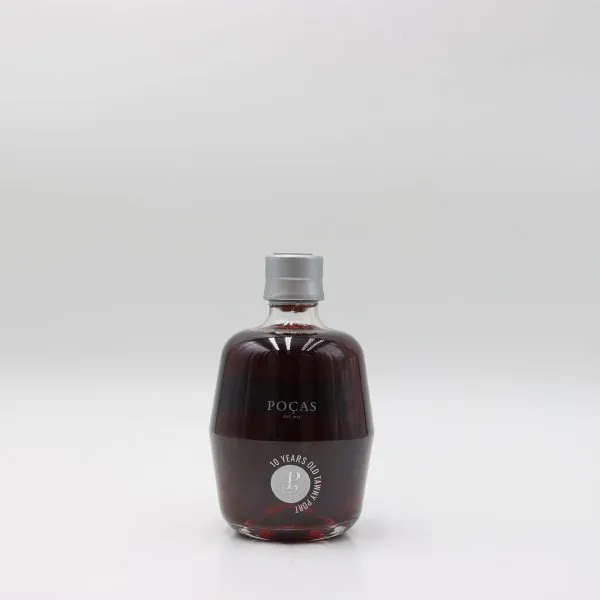
Kopke Tawny 10 Years
Kopke Tawny 10 Anos — An Age-Indication Tawny Port from Kopke, the oldest of the Port houses, with winemaking by Carlos Alves.
The difference between an aged tawny and a red Port lies entirely in the kind of ageing. A Ruby or a Vintage matures in bottle or in large vessels, sheltered from air, and keeps its fruit. A tawny matures in small oak casks, where there is far more oxygen contact per litre of wine — and it is that slow, controlled oxidation which turns red fruit into nuts, honey and caramel, and ruby into tawny. This is not a fault: it is the objective.
Picking is by hand at optimal ripeness, and fermentation takes place in lagares under temperature control between 28 °C and 30 °C, with continuous pump-overs, until it is arrested by the addition of grape spirit — the benefício, which locks in the grape’s natural sweetness. The blend gathers wines from several harvests, and the ten years on the label are the approximate average age of the components, not the age of the youngest or the oldest. Traditional Douro varieties: Touriga Nacional, Touriga Franca and Tinta Roriz. Bottled at 20%.
Serve between 12 °C and 14 °C, cool but not cold. Excellent with foie gras, nuts and aged cheeses; for dessert, with caramel brownies, chocolate and pistachio pavé, almond tart and crème brûlée.
Once opened, the bottle holds in good condition for four to six months — a clear advantage for by-the-glass service. Store it upright.
Awards: Gold at the Decanter World Wine Awards (2015 and 2021), Gold at the Sommelier Wine Awards (2020), Silver at the International Wine & Spirits Competition (2020) and Gold at the International Wine Challenge.
The difference between an aged tawny and a red Port lies entirely in the kind of ageing. A Ruby or a Vintage matures in bottle or in large vessels, sheltered from air, and keeps its fruit. A tawny matures in small oak casks, where there is far more oxygen contact per litre of wine — and it is that slow, controlled oxidation which turns red fruit into nuts, honey and caramel, and ruby into tawny. This is not a fault: it is the objective.
Picking is by hand at optimal ripeness, and fermentation takes place in lagares under temperature control between 28 °C and 30 °C, with continuous pump-overs, until it is arrested by the addition of grape spirit — the benefício, which locks in the grape’s natural sweetness. The blend gathers wines from several harvests, and the ten years on the label are the approximate average age of the components, not the age of the youngest or the oldest. Traditional Douro varieties: Touriga Nacional, Touriga Franca and Tinta Roriz. Bottled at 20%.
Serve between 12 °C and 14 °C, cool but not cold. Excellent with foie gras, nuts and aged cheeses; for dessert, with caramel brownies, chocolate and pistachio pavé, almond tart and crème brûlée.
Once opened, the bottle holds in good condition for four to six months — a clear advantage for by-the-glass service. Store it upright.
Awards: Gold at the Decanter World Wine Awards (2015 and 2021), Gold at the Sommelier Wine Awards (2020), Silver at the International Wine & Spirits Competition (2020) and Gold at the International Wine Challenge.
More about this wine


